Some engagement sessions begin quietly.
Julie and James' began in Los Angeles, surrounded by metallic curves, hard sunlight, and architecture that looked like it wanted everyone to submit a concept statement before standing near it.
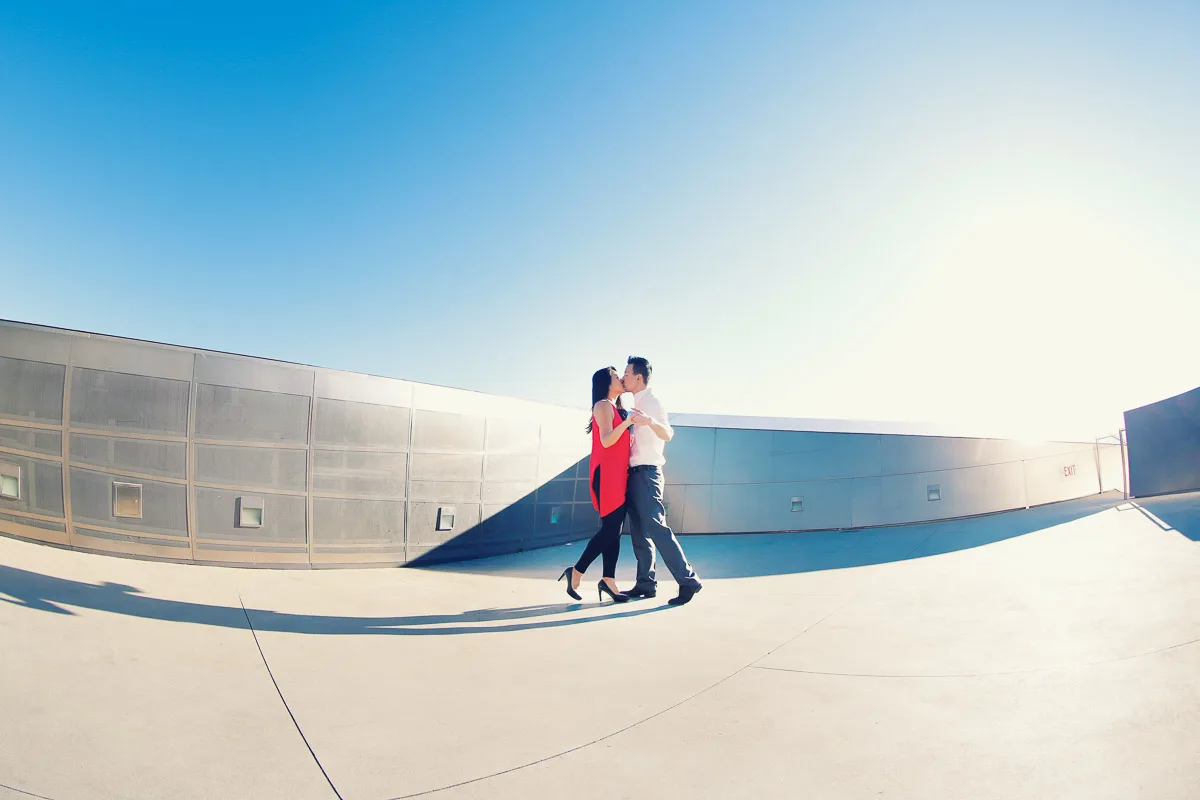
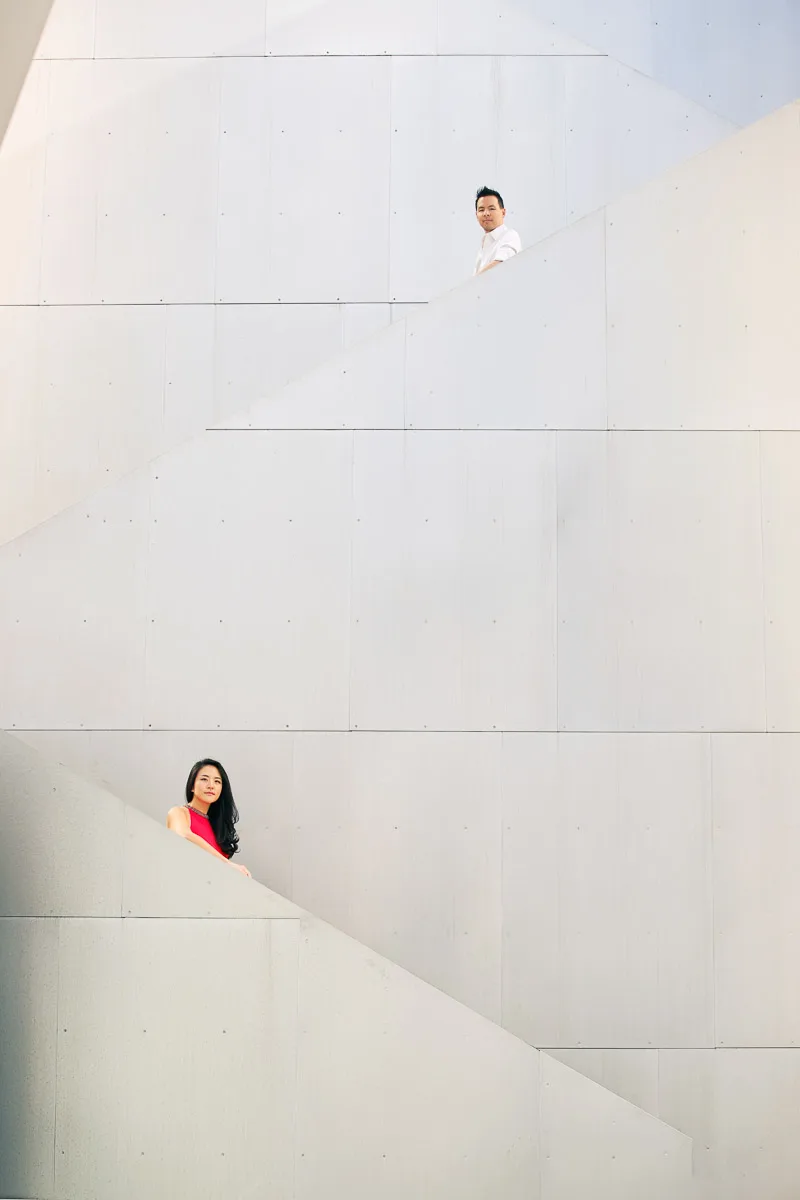
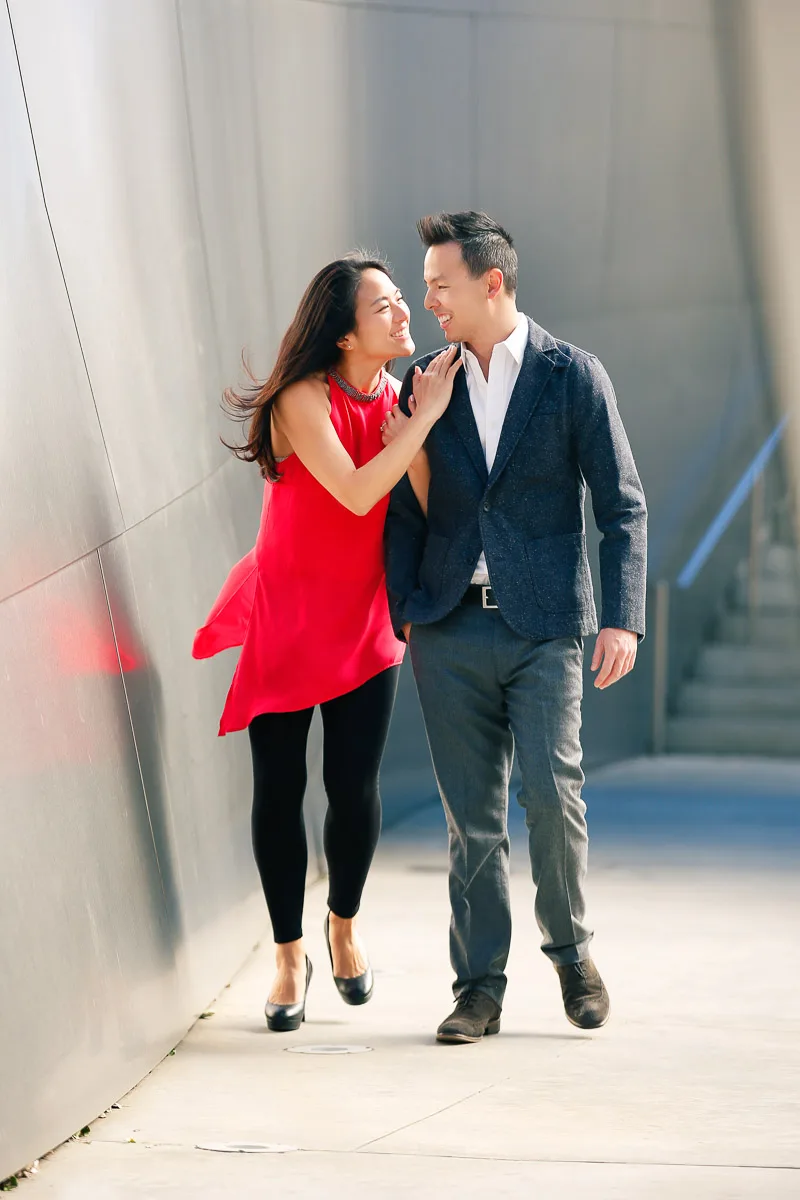
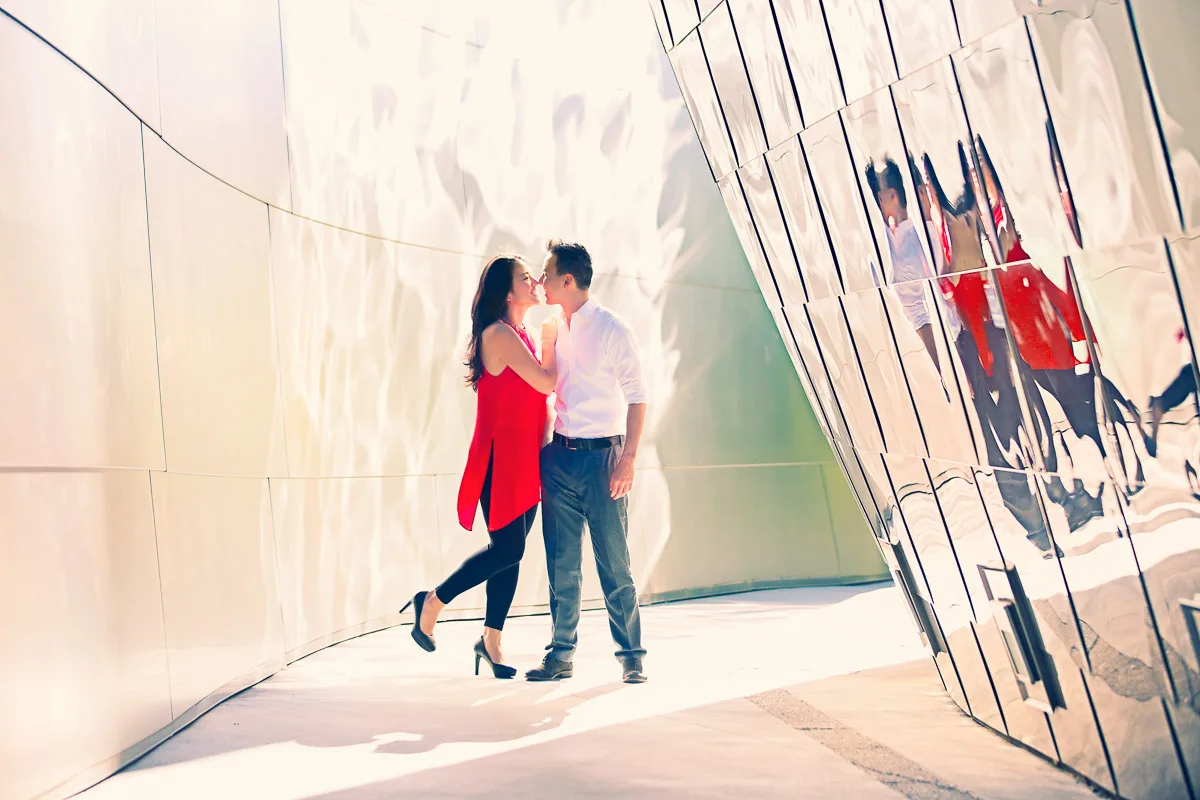
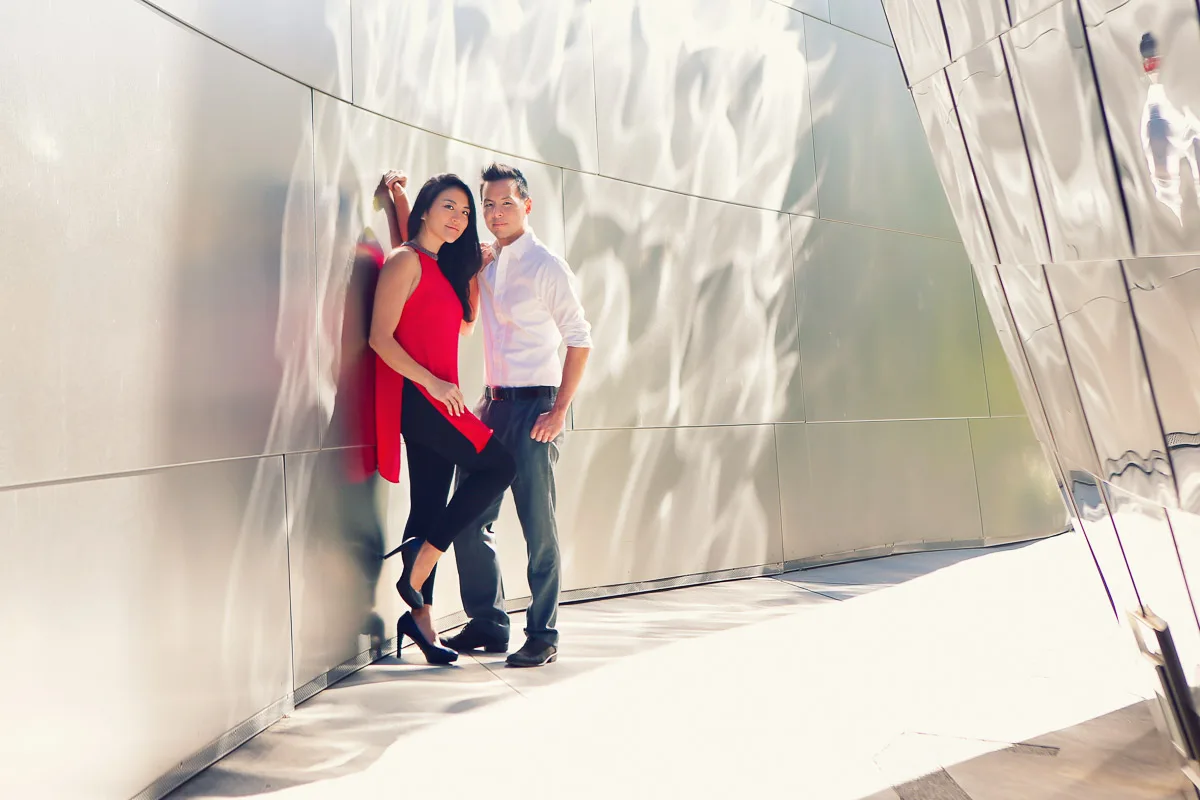
Julie wore red, which was the correct decision. Against all that silver and white, it did most of the work. James kept it clean in a white shirt and dark trousers, giving the two of them a nice visual rhythm: one bright signal, one steady counterweight.
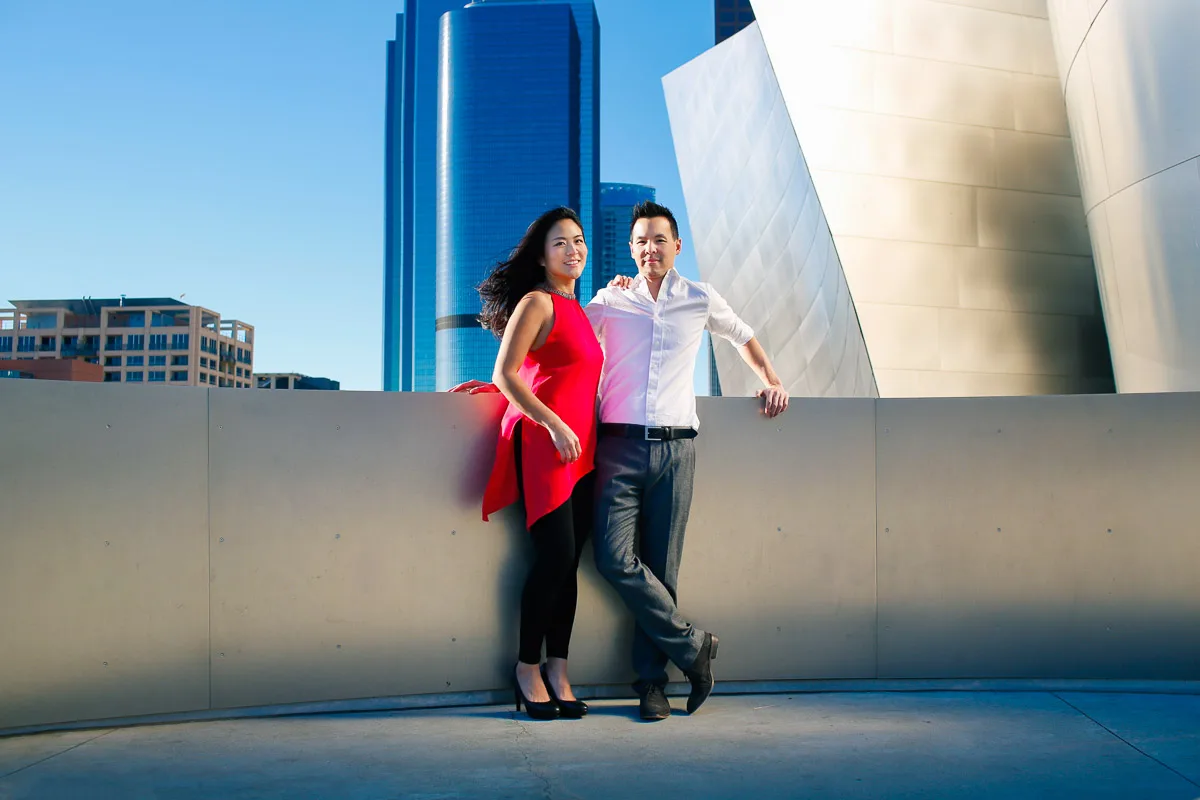
The Guggenheim half of the shoot had that crisp LA feeling — reflective panels, polished concrete, blue sky, and the sense that everything nearby had been designed by someone with excellent taste and questionable feelings about comfort.
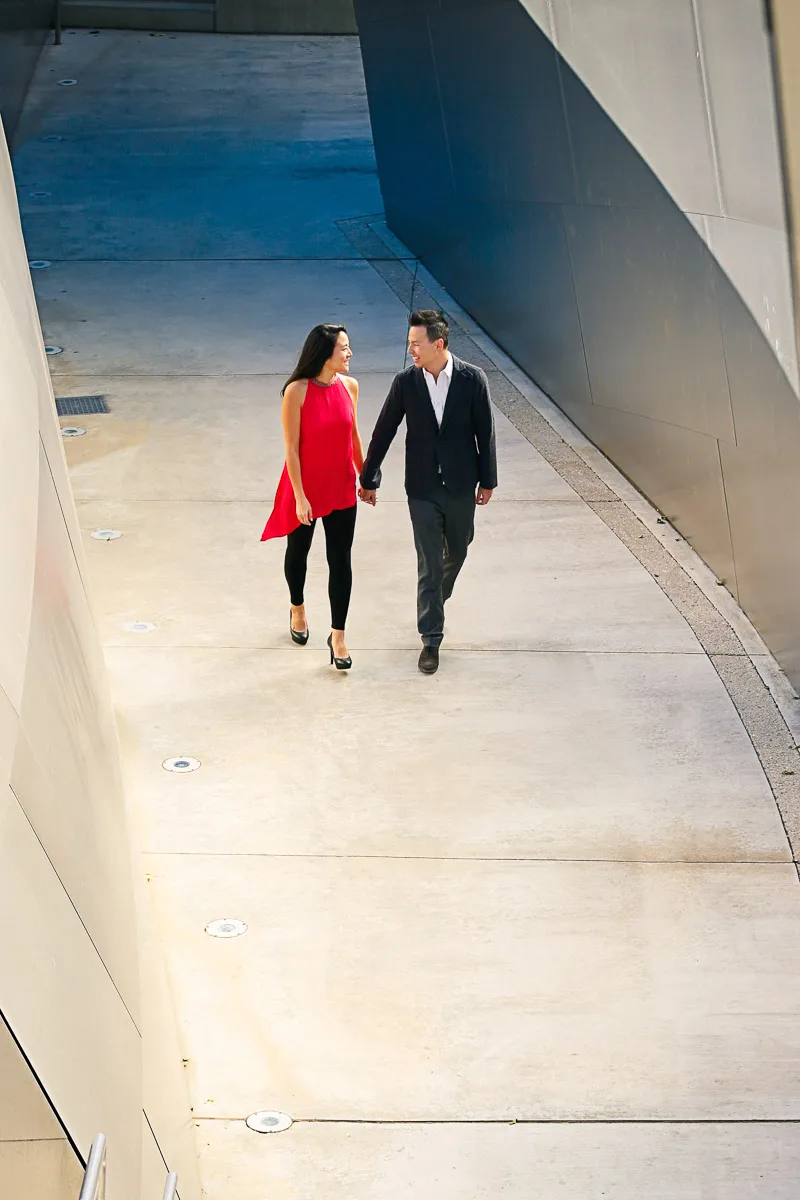
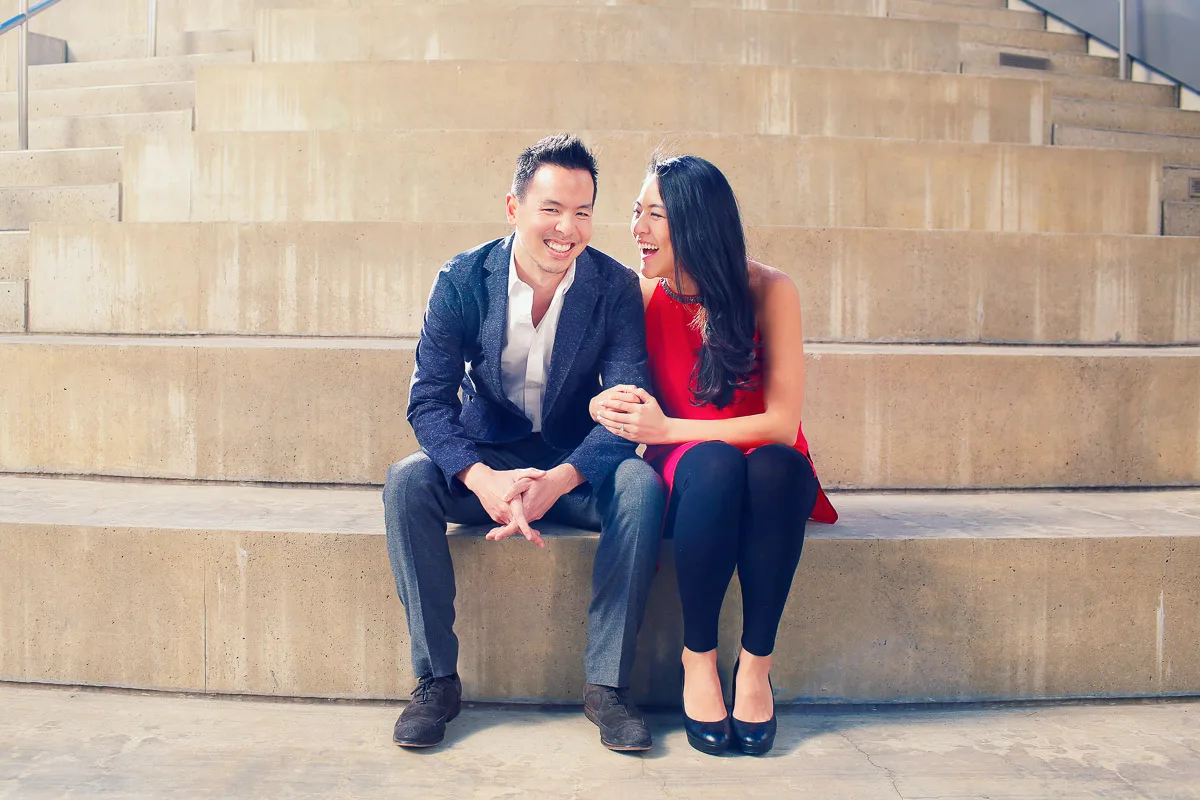
Julie and James handled it easily. They walked through narrow architectural corridors, leaned into the mirrored metal, and stood small inside enormous shapes. The building did all its sculptural theatre around them; they just made it feel human.
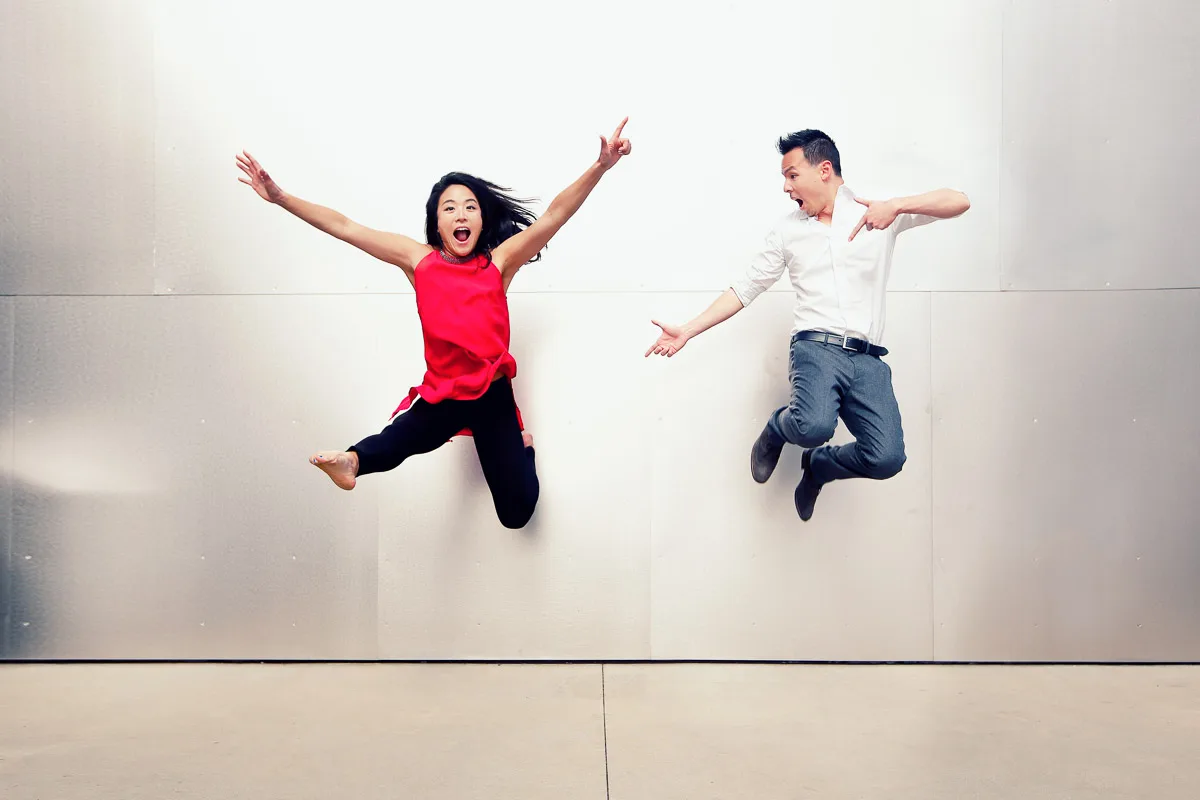
Then there was the jump.
Not a polite little engagement-session hop. A full, committed, mid-air situation.
Julie went up barefoot, red top flying, arms wide. James jumped beside her in shirt and trousers, looking delighted and faintly surprised to discover the meeting had become interpretive dance.
No half-effort. No self-conscious cool. Just two adults, briefly negotiating gravity, in front of a wall that had done nothing to deserve this.
That is most of what we needed to know.
The reflective wall shots were quieter. Julie and James close together, almost kissing, with the metal panels bending their reflections into strange little duplicate versions of themselves. Very useful. Every engagement session benefits from bonus Julies and Jameses, especially when the extras stay silent and catch the light properly.
Then the session changed temperature completely.
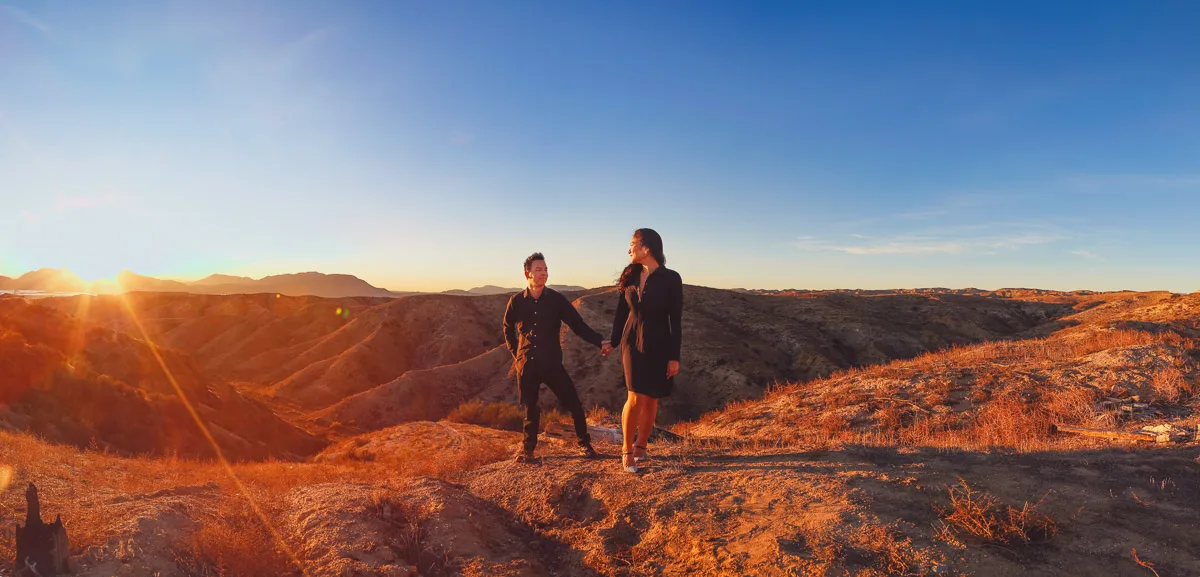
Joshua Tree took over from there: desert scrub, low hills, warm sun, and the kind of open space that makes everything feel less arranged. The red disappeared. The pace slowed. The city's polished surfaces gave way to dust, rocks, and sky.
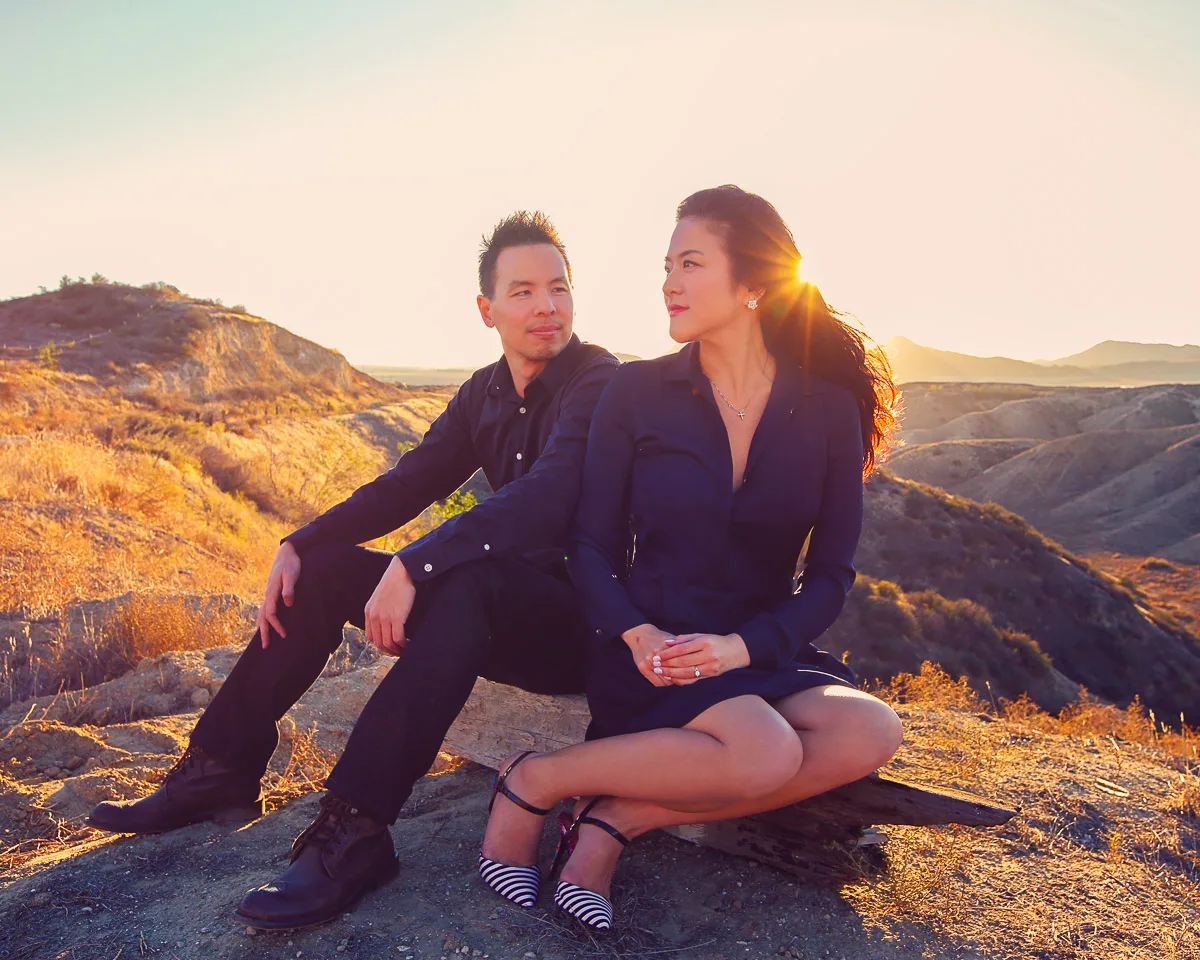
Julie and James sat together in the golden light, small against the landscape but not swallowed by it. The desert has a way of doing that — making people look tiny without making the moment feel small.
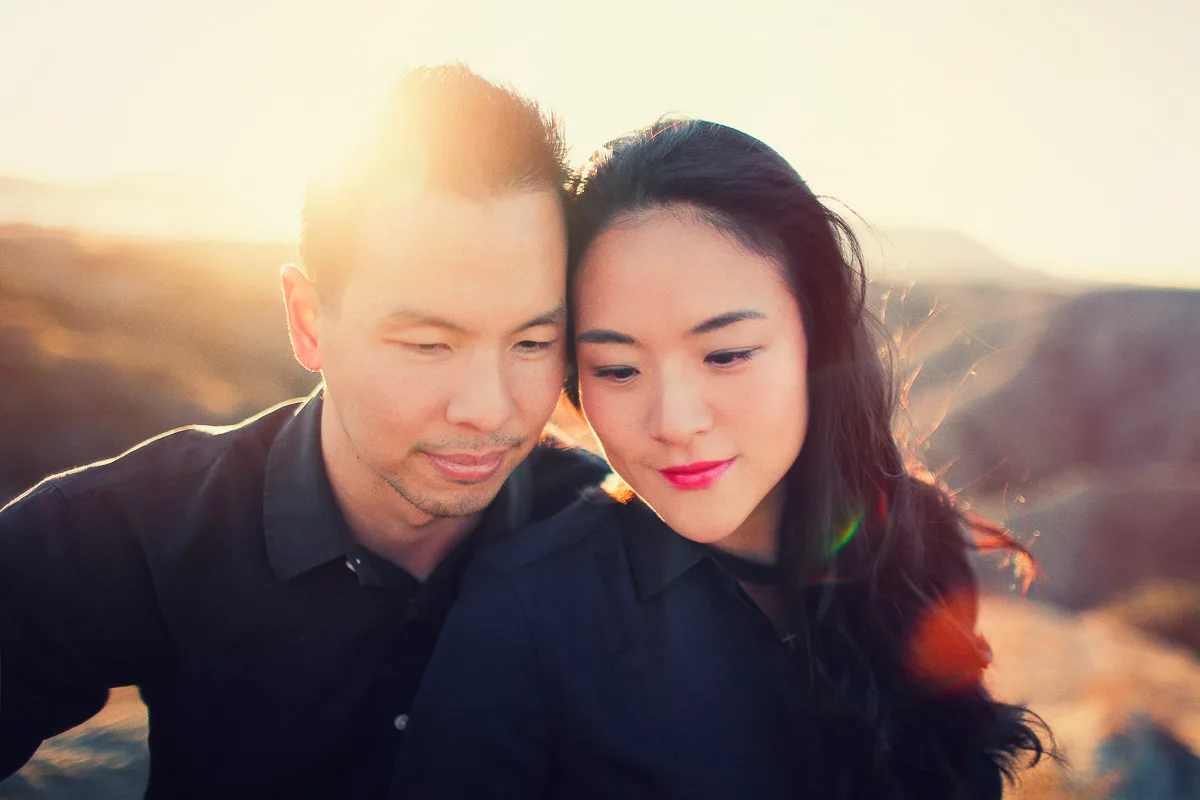
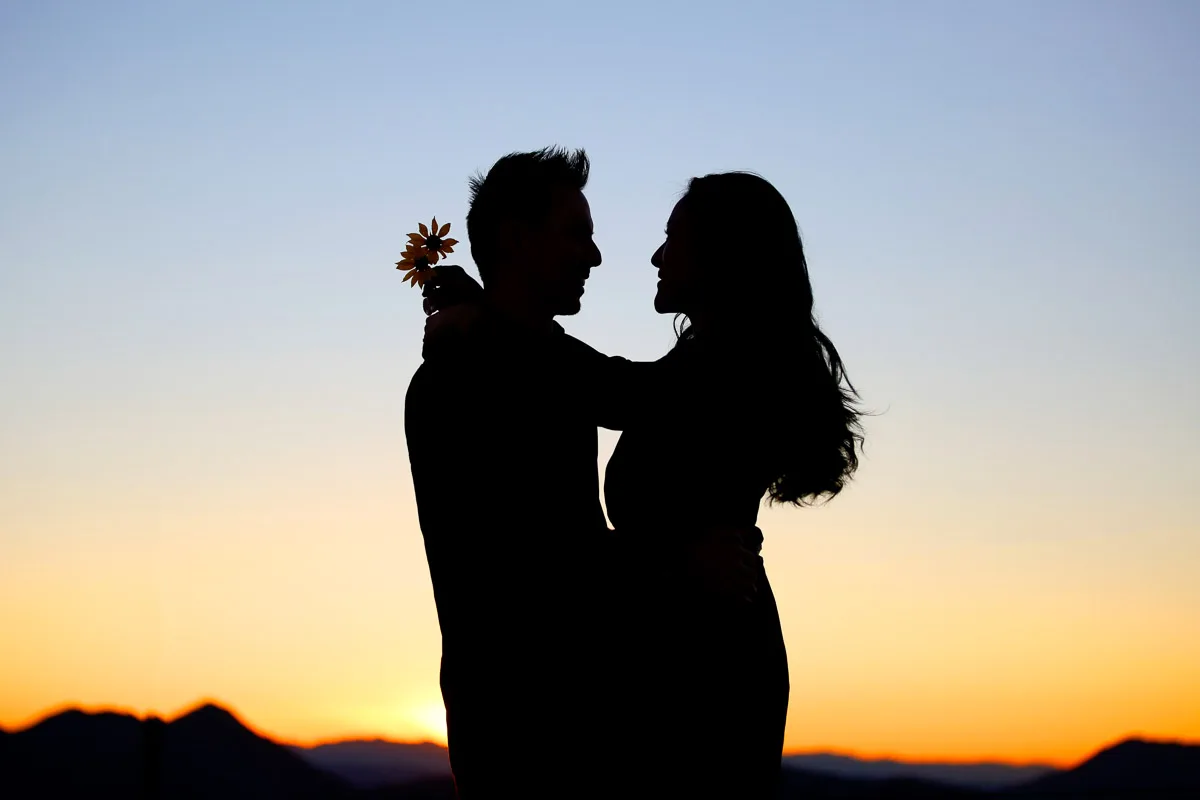
By sunset, they were in silhouette. James had his arm around Julie. Julie leaned in. A single flower appeared near his face, doing just enough emotional work without becoming a whole production.
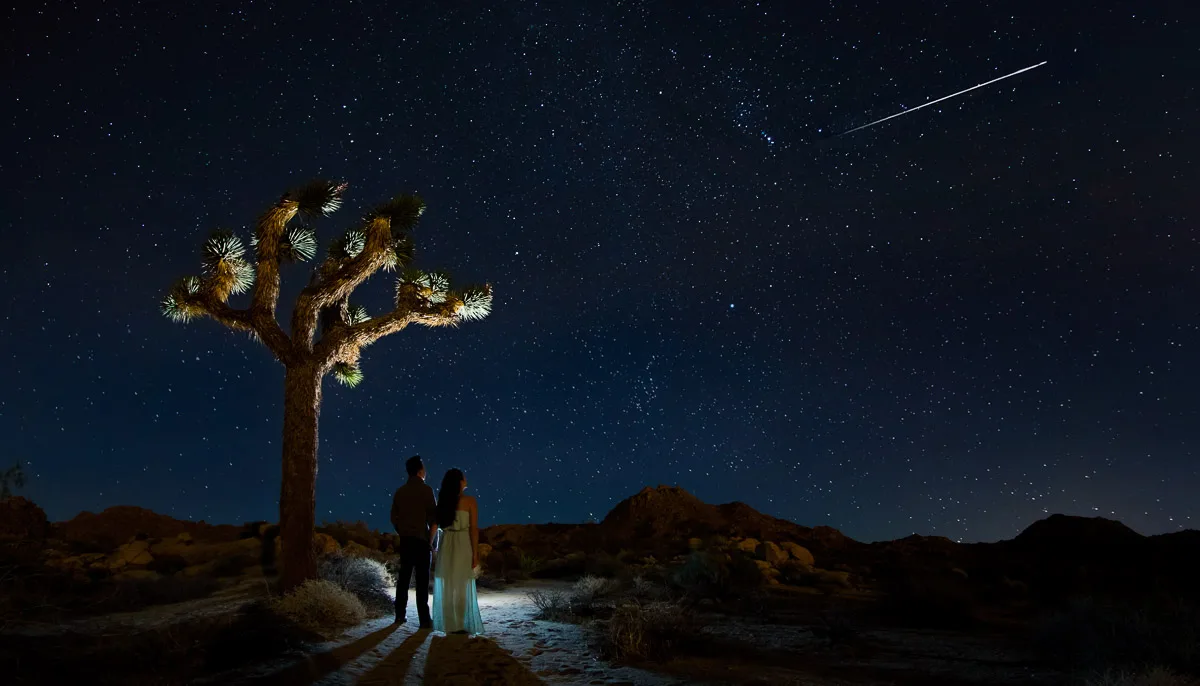
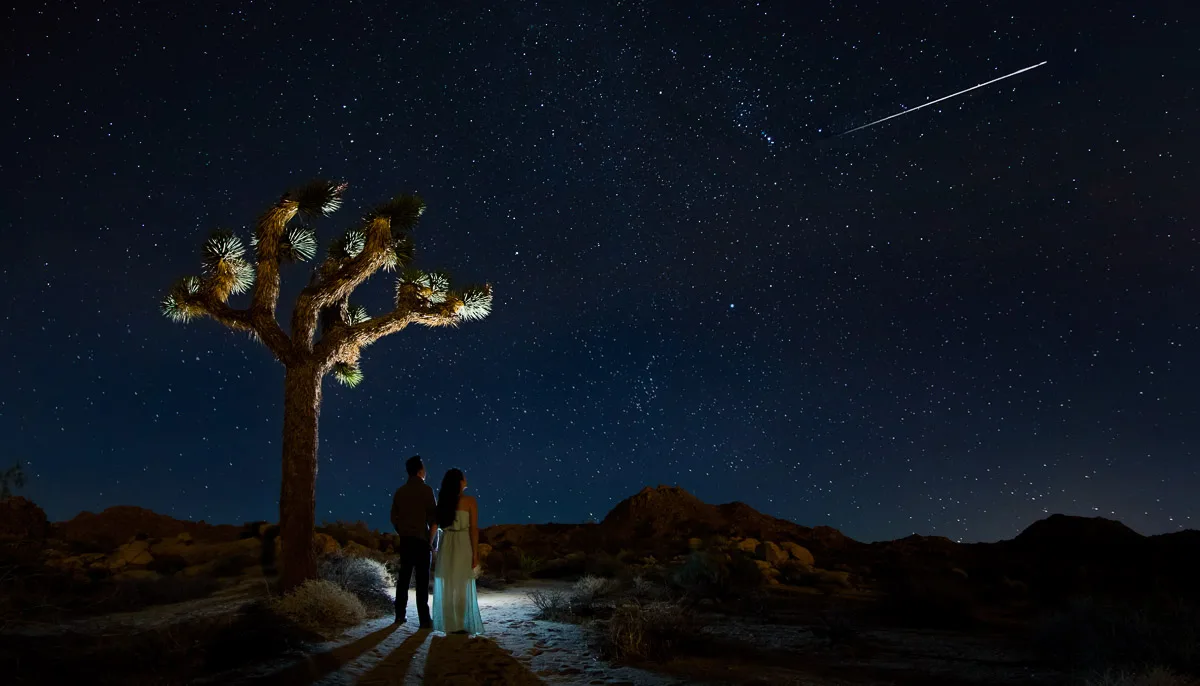
And then came the night frame.
A Joshua tree. A sky full of stars. Julie and James standing close beneath it, small in the dark, with the tree lit like it had been waiting all day for its dramatic entrance.
That was Part 1. The wedding is what happens after they've already proved they can survive reflective architecture and being asked to jump in public.